
Cabinet Layout Planning in Ellicott City, MD
Organize room dimensions and appliance details before finalizing a cabinet order.
Send my cabinet inquiry
Or call (562) 203-3232. Calls only, we do not receive text messages.
A cabinet layout change in Ellicott City should identify which input caused it and which other decisions it affects. Ellicott Cabinet Archive’s guide follows that chain from a room observation to a revised product schedule. It helps a buyer distinguish a deliberate alternative from an arrangement that has changed because an earlier assumption was wrong.
- Independent buying guidance
- Product inquiries
- Seller availability confirmed separately
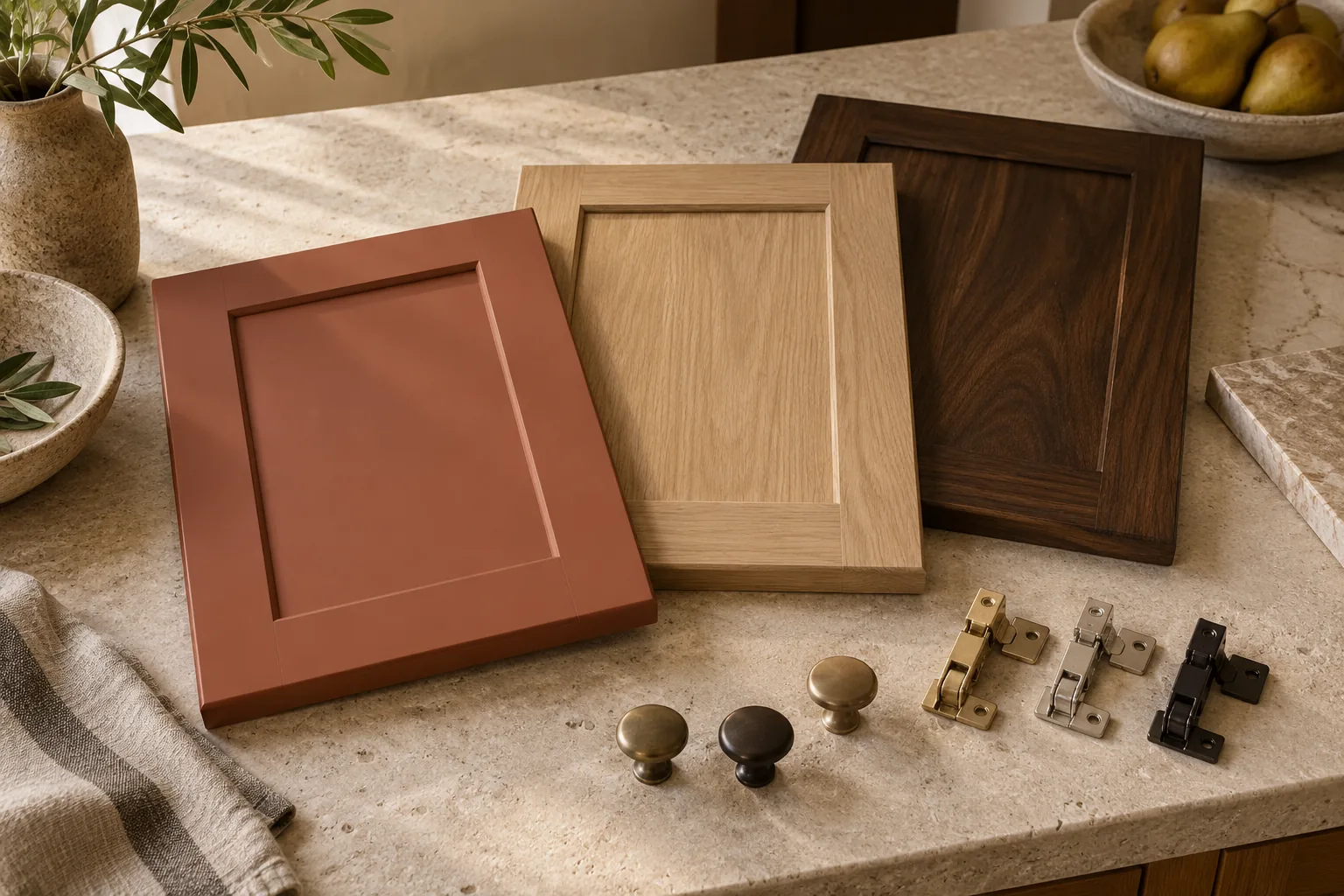
Buying questions: cabinet layout and order preparation
The Archive publishes independent information and records form details for owner review; there is no automatic seller transmission or guaranteed reply. It does not measure rooms or approve designs. Use the guide to prepare an input record for the person who will confirm the final drawing and goods.
About Ellicott Cabinet Archive
Know who handles each part
Independent cabinet buying information and quote-request service. We do not manufacture, stock or install cabinets. A referral, supplier response, appointment or purchase is not guaranteed. Product availability, delivery and installation must be confirmed directly with the seller or separately engaged contractor.
Separate current observations from proposed room changes
Use a labeled sketch to identify walls, openings and relevant obstructions. Record measured observations with their locations and the date or version of the record. Mark any feature expected to change as proposed. A drawing should not combine today’s measured room with tomorrow’s assumed opening without making the distinction visible.
For a hypothetical buyer considering a different opening beside a cabinet run, show the existing condition and the proposed one separately. The available run and accompanying pieces may depend on which condition is approved. Ask who confirms the broader property decision and who checks the final dimensions used by the cabinet arrangement.
This initial separation lets the buyer explore products without pretending the proposed room already exists. It also provides a reference if the change is abandoned. The retained current-condition record can then support another arrangement, rather than leaving the buyer to reconstruct which measurements preceded the proposal.
Attach appliance and utility inputs to specific positions
Identify equipment that remains, equipment selected for replacement and undecided items. Use available model information and dimensional documentation rather than relying on a general appliance category. Mark visible utility positions and concealed uncertainties where they matter to the proposed arrangement, without representing an inspection that has not occurred.
The supplied IKEA US planning guide supports collecting room measurements and retained appliance dimensions. It gives a preparation basis for asking the responsible reviewer which inputs remain missing. The guide does not guarantee that this site checks product-specific clearances or performs field measurement.
In the hypothetical changed-opening layout, a retained appliance may still constrain a neighboring cabinet position even if the wall arrangement changes. Keep that input linked to the affected rows. If the buyer chooses a replacement appliance later, identify which dimensions or operating relationships need another review rather than substituting a new name into an already accepted sketch.
Trace each input change through the affected goods
Give the proposed cabinet positions stable references. When a room input changes, identify which configurations, quantities, panels or fillers depend on it. A revised drawing can affect accompanying goods even when the number of main boxes appears unchanged. Ask the reviewer to explain those effects in the schedule.
For the opening example, a new available run could change a cabinet position and the treatment at its end. Keep the product changes associated with that room condition. Do not compare the revised offer as though it were merely a different finish on the original arrangement.
Create a short change note naming the input, affected rows and responsible confirmation. This is a practical dependency record rather than a technical design certification. It helps the purchaser ask a precise question: whether the proposed goods answer the new condition, and whether the condition has actually been established for the room before order approval.
Check operation before calling the arrangement settled
Investigate the movement of the proposed doors and drawers alongside appliances and room openings. Ask for the actual product and hardware information relevant to the arrangement. A closed-front image does not explain every operating relationship, and a general clearance rule should not replace the documents needed for the selected products.
Mark questions that need the responsible reviewer’s answer. The buyer may want to understand whether an adjacent door opens as intended, whether a drawer provides the desired use or how a changed opening affects the run. Keep the question attached to the positions it concerns.
For the hypothetical buyer, checking operation is useful in both current and proposed room versions. An alternative that looks balanced may still require a different configuration once its relationships are examined. Record the reason for that revision so it remains understandable. The purpose is to resolve dependencies transparently, not to have this information page certify that an unidentified layout will fit.
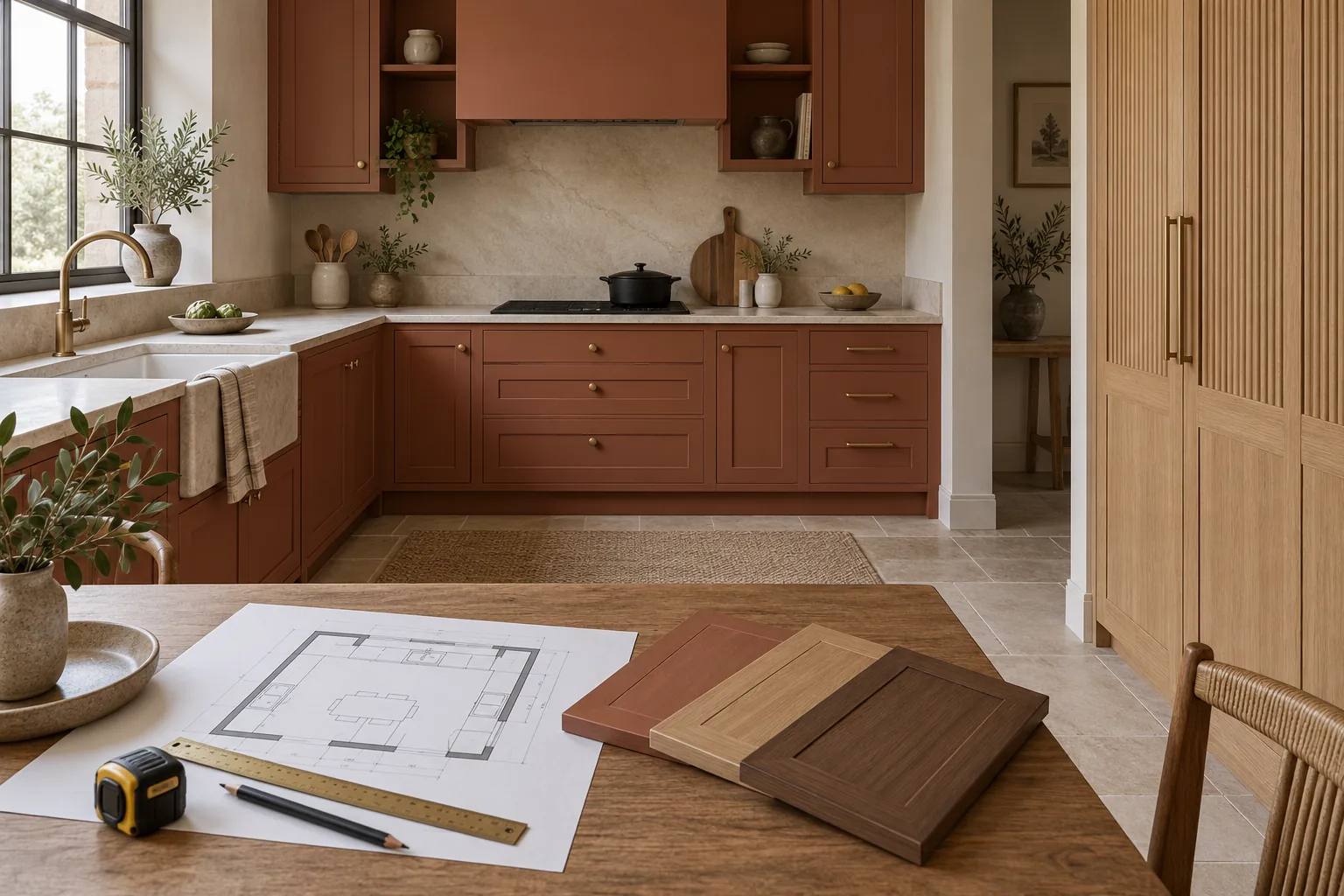
Compare cost only against a named arrangement
Request each offer against an identifiable drawing and product schedule. Show box quantities, configurations, selected finish, accessories and accompanying pieces. A total should tell you which room condition it assumes. If the changed opening remains provisional, ask the seller to state that assumption in the comparison.
Obtain freight or pickup and any separately offered carrying or assembly terms. External installation, removal and property alterations need their own provider agreements. The FTC’s written-estimate guidance supports reading scope and materials for home improvement tasks; it does not establish that a cabinet seller performs the opening change.
Preliminary estimates may change as inputs are confirmed; the final written quote should set the price and inclusions of the accepted version. In the hypothetical project, compare current-room and proposed-room arrangements by their different goods and external tasks. Do not use an earlier total as the offered price for a schedule revised in response to a new input.
Close the change record before handing over an order
Bring the final room inputs, drawing reference and selected product list into agreement. Ask the responsible approver to identify the information it has confirmed and any condition still unresolved. A purchasing record should show which version is accepted without requiring someone to interpret a series of informal corrections.
Name the purchaser who authorizes goods and the receiver who later checks them. Give the relevant version to any separately engaged provider whose work depends on the arrangement. If a later permitted change affects a position, update its dependent rows and communicate the revised reference.
An initial inquiry can describe the proposed opening, retained appliance record and the decision that remains open. That makes the request useful while acknowledging its stage. The final layout record should explain how the unresolved input was settled and what changed because of it, so a chosen arrangement can support an actual purchase rather than remain an attractive but ambiguous proposal.
Inquiry process
From buying questions to a possible supplier quote
Sending an inquiry does not reserve products or book work.
Describe the purchase
Include project ZIP, room, approximate cabinet list and preferred timing.
Clarify requirements
Identify assembly, access, measurements and any separately arranged labor.
Confirm referral availability
An inquiry can be referred only if a suitable seller accepts the location and product request.
Review seller terms
Confirm the final drawing, itemized price, payment, delivery and return terms directly before ordering.
Illustrative product choices
Illustrative product visualizations, not completed work, local properties or supplier facilities.
Local buying information
Local inquiry guides
Questions
Cabinet Layout and Order Preparation: Common Questions
How should I draw an opening that may change?
Show its current condition separately from the proposed one and identify which cabinet positions depend on the change. Ask the responsible party about the actual property work and final dimensions. Do not present a future opening as a measured existing feature.
Why can a room revision change panels without changing box counts?
Accompanying pieces depend on the arrangement and its ends or adjoining conditions. Ask the reviewer to trace the changed input through all affected rows. A stable main-box total does not prove that the rest of the goods can remain unchanged.
What should I do after selecting a different appliance?
Collect the selected model’s information and identify the neighboring positions or operation questions that need review. Update the input record and drawing version. An earlier arrangement should not retain approval based on dimensions that describe a different appliance.
Can I use the first quote after a layout change?
Ask whether the changed input affects configurations, quantities, accompanying pieces or offered tasks. If it does, obtain an updated quote tied to the revised arrangement. Keep both versions identifiable so a historical total is not mistaken for the current offer.
Talk to us about cabinet layout and order preparation
Describe the purchase and project ZIP in Ellicott City. Supplier acceptance and any referral are confirmed separately; no visit or quote is booked by this form.
Calls only, we do not receive text messages.