
Bathroom Vanity Quotes in Ellicott City, MD
Gather vanity dimensions and sink details before comparing product options.
Send my cabinet inquiry
Or call (562) 203-3232. Calls only, we do not receive text messages.
A vanity purchase in Ellicott City can begin with a question about what should remain: the cabinet, the basin arrangement or neither. Ellicott Cabinet Archive’s guide helps you define that boundary before asking for products. Changing a visible component can affect support, plumbing and usable storage even when the bathroom’s general appearance seems similar.
- Independent buying guidance
- Product inquiries
- Seller availability confirmed separately

Buying questions: bathroom vanity purchase quotes
The Archive offers independent buying information. Its owner reviews recorded inquiry details; the form does not automatically send a seller request or assure a response. Use this component-focused guide to prepare the evidence an actual product or work provider needs for the combination you are considering.
About Ellicott Cabinet Archive
Know who handles each part
Independent cabinet buying information and quote-request service. We do not manufacture, stock or install cabinets. A referral, supplier response, appointment or purchase is not guaranteed. Product availability, delivery and installation must be confirmed directly with the seller or separately engaged contractor.
Describe the retained component as an input to investigate
Identify what you propose to keep and what you would replace. Do not describe a retained cabinet as confirmed suitable for a new top merely because it is already in the room. Record its known dimensions and visible condition, with photographs and any available product information, then ask the responsible provider what further checking is needed.
For a hypothetical buyer keeping the cabinet while considering a new basin and top, the inquiry should distinguish a preference to reuse from an established compatibility answer. A separate complete-replacement option can be investigated if the reuse question is unresolved. Keep those scopes named so the product offers can be compared honestly.
The retained component is part of the proposed arrangement, not a free assumption outside it. If a product change depends on support, alignment or other work, identify the question and the party who can answer it. The guide helps make that dependency visible without performing a condition assessment or promising that existing goods can be reused.
Observe the room before selecting the new combination
Make a sketch that labels the intended vanity wall, openings and nearby fixtures. Note how the room’s doors and existing storage operate. A proposed component can affect use even if its closed footprint seems similar. Photographs help explain the relationship but do not replace the dimensional information needed for the actual selection.
The supplied Home Depot measurement guide highlights available space, door swing and plumbing position. Use those as observation topics. Do not adopt an unsourced universal clearance or infer that this guide can establish a local approval result.
In the hypothetical retained-cabinet project, investigate how the proposed basin and top relate to the surrounding room and the operation of the existing cabinet. Mark uncertain observations as preliminary. The responsible reviewer should identify how final fit will be confirmed for the selected goods, rather than treating a familiar bathroom arrangement as proof that nothing needs checking.
Link plumbing observations to the proposed products
Record visible supply and drain positions and distinguish concealed conditions from known ones. If the proposed basin arrangement changes the relationship to those connections, ask the appropriate professional what needs to be checked. Do not turn an assumed plumbing route into a factual line on the room record.
Ask for the actual product documentation describing the top, basin and any included fittings. A similar appearance does not establish that the new combination uses the same connections or support arrangement. Keep the answers connected to the offered model rather than a generic category name.
For the reuse example, the buyer may discover a question that cannot be settled from photographs or a product description alone. Assign it to the responsible provider and leave the selection conditional. If the answer requires external work, obtain that provider’s scope before treating the change as part of the product purchase. A cabinet or basin offer does not automatically include plumbing alterations.
Compare complete component lists rather than product names
Write the included cabinet, top, basin, faucet and accessories as named items where they are offered. Identify which components would be retained or obtained elsewhere. A product called a vanity should be read according to the seller’s actual inclusion list, not your expectation of a complete pictured set.
If comparing reuse with replacement, show the new goods and external tasks in each version. The replacement option may introduce different storage or hardware, so ask what it actually offers. Neither version should inherit the other’s compatibility answer without checking the changed components.
For construction claims about a proposed cabinet, request the line’s actual evidence. KCMA’s supplied source identifies a performance and construction standard covering kitchen and vanity cabinets, but does not certify an unknown product. A retained cabinet’s condition and a new line’s certification are separate questions. Keep the evidence for each with the decision it can legitimately support.

Compare component cost with the cost of making the combination work
Identify box quantities and configurations for any new cabinet goods, together with finish and accessories. Show the offered top and basin separately where appropriate, and ask for actual freight or pickup and handling terms. If the cabinet is retained, say so instead of presenting its absence as a complete-room price advantage.
External labor for removal, installation, support or plumbing work must come from its provider’s agreement. The FTC’s written-estimate guidance supports examining scope, materials and price. It does not establish that a product seller includes those tasks or that reuse avoids them.
Initial estimates remain open to revision; the final written quote should define the offered price and inclusions for the selected component version. In the reuse example, compare the actual tasks required to make the new combination work. An unknown compatibility or labor figure is an unresolved part of the budget, not a saving confirmed by the lower product subtotal.
Keep the component approval and receiving records together
Before buying, align the selected product references with the room observations and any provider answer about reuse. Identify who approved compatibility and who authorizes the purchase. If a basin, top or cabinet changes, revisit the dependencies rather than leaving the old answer attached to a different combination.
Obtain the seller’s acknowledgment and receiving instructions for the actual components. Ask how packages will be identified and how a discrepancy should be recorded. A receiver should know which pieces are expected and which belong to a separate purchase, without having to infer them from an illustration.
A useful early inquiry can explain the retained-component preference, proposed replacements and specific question awaiting evidence. Provide the project address and record the preliminary nature of any measurements. The final choice should remain understandable as a coordinated combination, with product and external-work commitments recorded separately instead of assumed from the term vanity.
Inquiry process
From buying questions to a possible supplier quote
Sending an inquiry does not reserve products or book work.
Describe the purchase
Include project ZIP, room, approximate cabinet list and preferred timing.
Clarify requirements
Identify assembly, access, measurements and any separately arranged labor.
Confirm referral availability
An inquiry can be referred only if a suitable seller accepts the location and product request.
Review seller terms
Confirm the final drawing, itemized price, payment, delivery and return terms directly before ordering.
Illustrative product choices
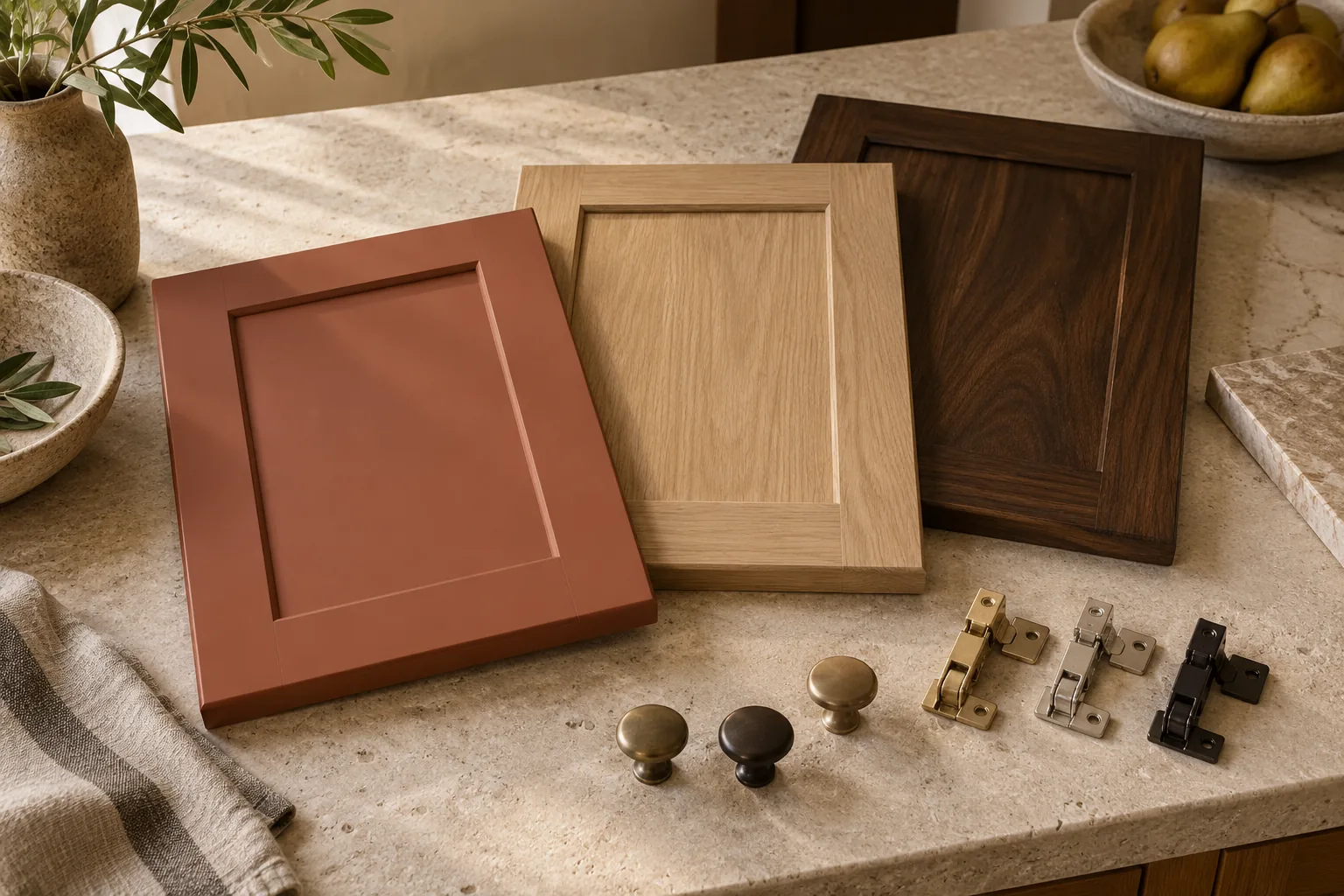
Illustrative product visualizations, not completed work, local properties or supplier facilities.
Local buying information
Local inquiry guides
Questions
Bathroom Vanity Purchase Quotes: Common Questions
Can I compare a new top while keeping the existing cabinet?
You can investigate that option, with reuse identified as a condition to confirm. Record the retained cabinet’s dimensions and available information, then ask the responsible provider about compatibility and required support or work. Keep complete replacement as a separate scope if comparing both.
What if the plumbing route is concealed?
Label it as unknown and give the relevant professional the visible observations and proposed product information. Do not draw an assumed concealed route as a verified fact. A selected basin or cabinet should remain conditional where the unresolved connection can affect it.
How do I read a package advertised as a vanity?
Ask for its actual component list and identify retained or separately purchased pieces. Product names and images do not establish that a top, basin, faucet or accessory is included. Compare offers by named goods and the external tasks each combination requires.
Does evidence for a new cabinet answer the condition of the old one?
No. Product documentation or certification for a proposed line does not assess the retained cabinet. Investigate the condition and reuse question separately, and keep each answer linked to the component and decision it actually supports.
Talk to us about bathroom vanity purchase quotes
Describe the purchase and project ZIP in Ellicott City. Supplier acceptance and any referral are confirmed separately; no visit or quote is booked by this form.
Calls only, we do not receive text messages.